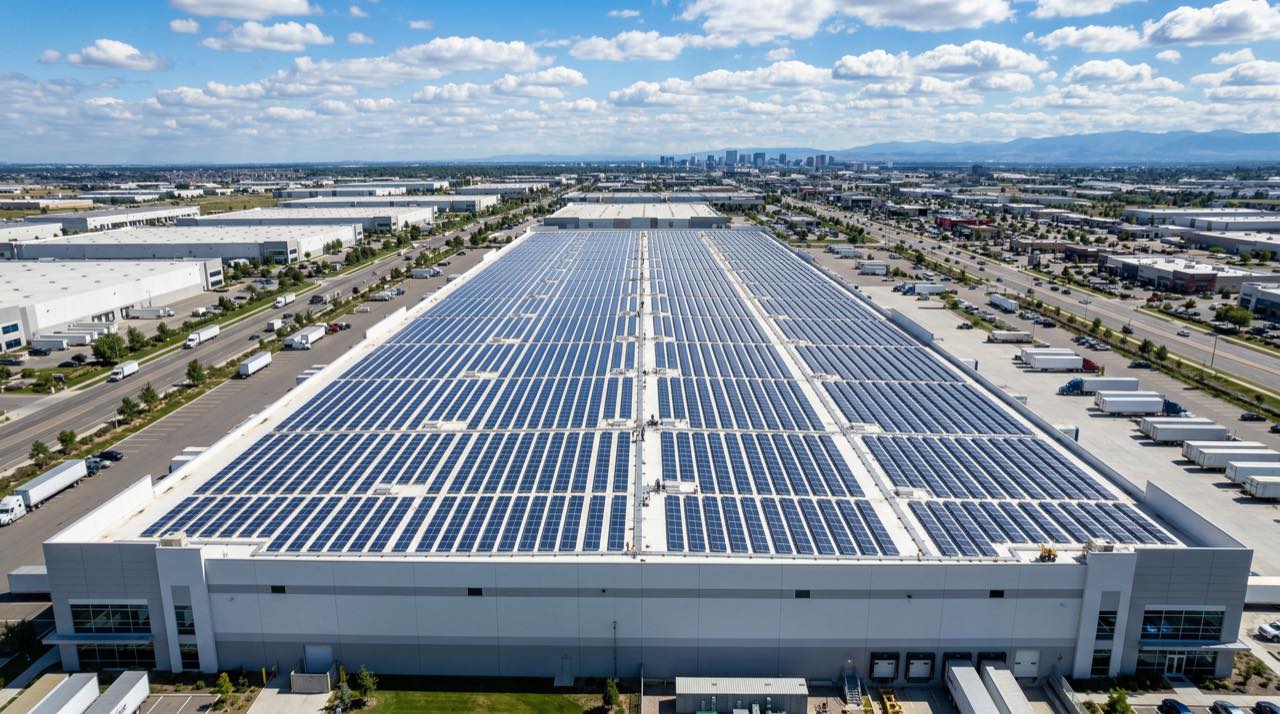
The Investment Case

An Asset, Not
an Expense

Solar energy systems are one of the few capital investments that generate a measurable, predictable return from day one. Whether you're a farm operation or a commercial facility, the math is compelling — and we'll show you every number before you sign anything.

We offer multiple paths to ownership and savings. Our financing specialists work with you to model each option against your specific tax situation, energy profile, and capital availability — so you can choose with complete confidence.

Get a Custom Estimate
30%
Federal Investment Tax Credit (ITC) on installed system cost
5–9 yr
Typical payback period for agricultural & commercial installs
25+ yr
Panel lifespan producing clean energy beyond payback
$0
Down payment required with select solar loan programs
The Process

How Financing
Works with Us

From the first number-crunching conversation to the moment your system goes live, we walk beside you at every step.

01

Free Assessment & Modeling

We evaluate your site, energy usage, and tax position, then model every financing scenario side-by-side so you see the true cost and return of each option before committing to anything.

02

Choose Your Structure

Select the financing path that fits your goals — outright purchase, solar loan, PPA, or lease. We coordinate lender relationships, handle paperwork, and keep the process straightforward.

03

Install & Start Saving

Once financing is finalized, our crews get to work, and your savings — and tax credits — begin with your next billing cycle.

Tax Advantages

The Government Wants
You to Go Solar

Federal and state incentives significantly reduce your net system cost. We help you capture every dollar you're entitled to.

Example: $500,000 Agricultural System
Gross System Cost $500,000
Federal ITC (30%) −$150,000
Accelerated Depreciation (Yr 1 ~85%) −$120,000
State Incentives (est.) −$15,000
Effective Net Cost ~$215,000

Example only. Tax benefits vary based on entity type, tax position, and state. Consult your tax advisor. Ag Energy does not provide tax advice.

Federal Investment Tax Credit (ITC)
30%

The federal ITC allows you to deduct 30% of your total solar system cost directly from your federal income taxes. This applies to agricultural and commercial installations. For a $500,000 system, that's $150,000 back in your pocket.

Accelerated Depreciation (MACRS / Bonus)
100% Yr 1

Solar equipment qualifies for MACRS 5-year depreciation, and under current bonus depreciation rules, many agricultural and commercial installations can deduct a substantial portion of the system cost in Year 1. This creates a powerful tax shield in the year of installation, dramatically improving first-year cash flow.

State & Utility Incentives
Varies by State

Illinois, Iowa, Indiana, Ohio, and other states we serve each offer varying combinations of property tax exemptions, sales tax exclusions on equipment, and net metering programs. Our team maps the specific incentives available in your location as part of every proposal.

Net Metering
Sell the Surplus

When your system produces more energy than you consume, net metering allows you to send that excess back to the grid and receive credits on your utility bill. Agricultural and commercial operations often generate significant net metering credits, further improving the financial picture.

Your Options

Find the Structure
That Fits Your Goals

There is no one-size-fits-all answer. We model every option against your real numbers so you can decide with confidence.

Solar Loan

Finance your system with a dedicated solar loan — often with $0 down — and still own the system outright. You receive all tax benefits (ITC, depreciation), while keeping capital available for other operations. Monthly loan payments are typically lower than your previous utility bill, making the cash flow positive from month one.

Key Advantages
  • Own the system and keep all tax incentives
  • $0 down options available through our lender partners
  • Fixed monthly payments — predictable budgeting
  • Loan payment often less than current utility costs
  • Full equity in the system from day one
Best For Operations that want ownership benefits and tax incentives without deploying capital upfront. Most popular option for farms and commercial clients.
Power Purchase Agreement (PPA)

In a PPA, a third-party investor owns the system on your property and you purchase the electricity it generates at a fixed, below-market rate. No upfront cost, no ownership responsibilities, and immediate utility bill savings. The investor captures the tax benefits, which is how they can offer you a below-market rate.

Key Advantages
  • $0 upfront cost — no capital required
  • Fixed below-market electricity rate for the agreement term
  • No maintenance or performance responsibility
  • Immediate reduction in energy costs
  • Option to purchase system at end of term
Best For Organizations without tax appetite to use the ITC directly — nonprofits, municipalities, churches, or entities preferring off-balance-sheet arrangements.
Solar Lease

Lease the solar equipment for a fixed monthly payment and use all the electricity it produces. Similar to a PPA, but you pay a flat lease rate rather than a per-kilowatt-hour rate. The leasing company owns the system and handles maintenance. Straightforward, predictable monthly cost with no ownership complexity.

Key Advantages
  • Low or $0 down — minimal upfront cost
  • Fixed monthly payment — simple budgeting
  • Maintenance handled by the leasing company
  • Predictable energy costs regardless of utility rate changes
  • Option to purchase or renew at lease end
Best For Smaller commercial operations that want immediate savings with maximum simplicity and zero maintenance responsibility.
Common Questions

Financing
Questions Answered

How does the federal tax credit actually work?

The federal Investment Tax Credit (ITC) lets you reduce your federal income tax liability by 30% of the total solar system cost. It's a dollar-for-dollar credit — not a deduction. If your system costs $200,000, you receive a $60,000 credit. Unused credits can typically be carried forward.

What credit score do I need for a solar loan?

Requirements vary by lender, but most solar loan programs work with credit scores of 650 and above. Agricultural and commercial clients may have additional options through equipment financing. We connect you with lenders suited to your specific situation.

Can I still get tax benefits with a PPA or lease?

In a PPA or lease, the third-party system owner — not you — claims the tax credits. That's part of the trade-off: you get a lower rate without the tax complexity. If you have strong tax appetite, a loan or cash purchase almost always delivers better long-term economics.

How long does the financing process take?

From application to approval, solar loans typically close in 1–3 weeks. We pre-qualify you before beginning final system design so financing is never a bottleneck. PPA and lease agreements are typically executed within 2 weeks of site assessment completion.

Will solar affect my property taxes?

Many states — including Illinois and Indiana — offer property tax exemptions for solar installations, meaning the increased property value from your solar system is excluded from your assessed value. We document applicable exemptions as part of every proposal.

What happens at the end of a PPA or lease term?

At term end, you typically have three options: renew the agreement at a new rate, purchase the system at fair market value (often very low after 20+ years of depreciation), or have the equipment removed at no cost. Most clients elect to purchase — at that point the system has years of productive life remaining.

Ready to Run the Numbers?

Let's Model Your
Return Together

Our team builds a complete financial model for your specific situation — system size, tax position, financing structure, and 25-year cash flow projections. No obligation, no pressure.

Schedule Free Assessment Explore Our Services